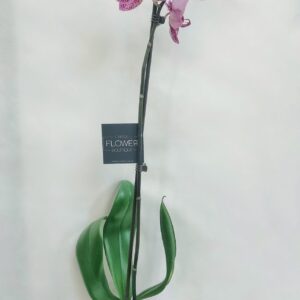
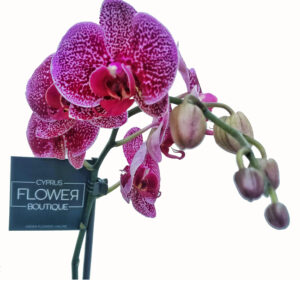
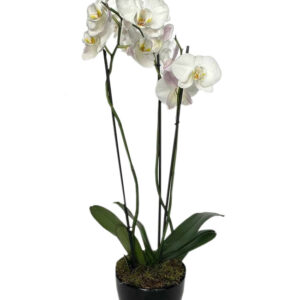
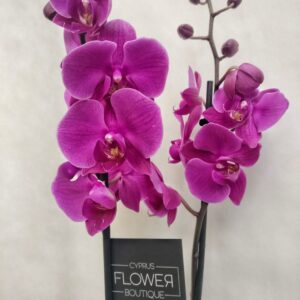
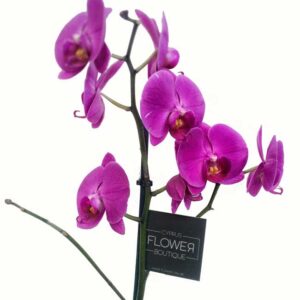
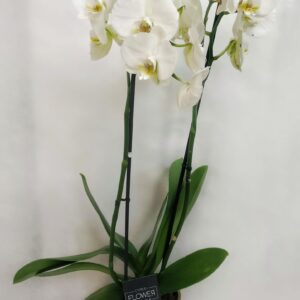
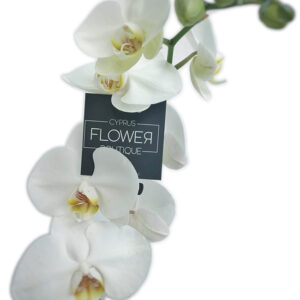
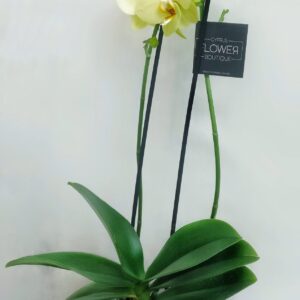
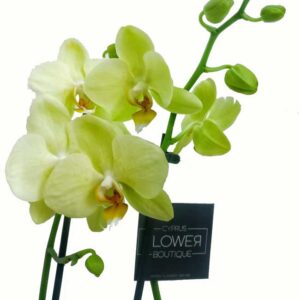
Orchids in the genus Phalaenopsis are monopodial ephiphytic, sometimes lithophytic herbs with long, coarse roots and short leafy stems hidden by overlapping leaf bases. The leaves are usually arranged in two rows, relatively large and leathery, oblong to elliptic and sometimes succulent.
Care requirements:
Environment: Both indoor and outdoor. Orchids don’t do well in cold temperatures and during warmer months the plants should be kept under trees.
Light: This plant prefers bright, indirect light and should be best placed in an east to south-facing window or room.
Watering: Orchids need ample water but should be allowed to dry out some between watering. Water if about 2 cm into the soil is dry, otherwise, let it be.
Fertilizing: Fertilize weekly or bi-weekly while they are producing new growth and decrease to monthly or bi-monthly once they mature
Orchids in the genus Phalaenopsis are monopodial ephiphytic, sometimes lithophytic herbs with long, coarse roots and short leafy stems hidden by overlapping leaf bases. The leaves are usually arranged in two rows, relatively large and leathery, oblong to elliptic and sometimes succulent.
Care requirements:
Environment: Both indoor and outdoor. Orchids don’t do well in cold temperatures and during warmer months the plants should be kept under trees.
Light: This plant prefers bright, indirect light and should be best placed in an east to south-facing window or room.
Watering: Orchids need ample water but should be allowed to dry out some between watering. Water if about 2 cm into the soil is dry, otherwise, let it be.
Fertilizing: Fertilize weekly or bi-weekly while they are producing new growth and decrease to monthly or bi-monthly once they mature
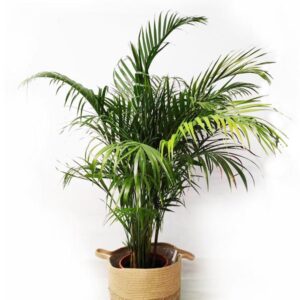
The Areca Palm is a truly elegant indoor palm. Multiple stems emerge from its base, with numerous long, gracefully arching fronds growing close together along the stems. Leaves are pinnate, ie feather shaped. It is one of the top air purifying plants and a natural humidifier that will improve the air quality of your home or office as well as adding a relaxing tropical feel.
Care requirements:
Environment: Both indoor and outdoor
Light: High dependency on light and needs to be placed in a bright indirect light spot.
Watering: Allow to dry out between watering. Wait a day or two if you can feel moisture in the top two to five cm of the soil.
Fertilizing: Fertilize in spring and summer only, with a palm fertilizer or a standard houseplant fertilizer at half strength
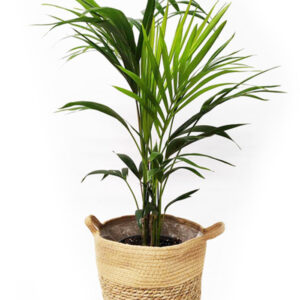
The Kentia Palm Tree, slow growing and easy to care for, is the classic indoor palm that gives an elegant feel of tropical paradise. The houseplant brings memories of happy times of summer with its long dark green fronds and it is no surprise that they are very popular with decorators, being a beautiful attraction to the decor of entryways, office building and hotel lobbies.
Care requirements:
Environment: Both indoor and outdoor
Light: Needs decent but indirect sunlight especially in the early mornings and late afternoons and can do well in shady areas.
Watering: Keep them hydrated by misting the leaves with water and keeping the soil lightly misted as well with good drainage. Do not over water the plant.
Fertilizing: Fertilize monthly only in the spring and summer with liquid fertilizer or slow-release pellets.
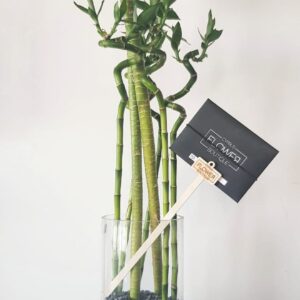
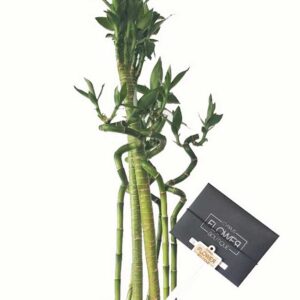
Lucky bamboo arrangement in a tall vase. This arrangement consists of two spiral 8″ sticks and four 12″ straight sticks.
Care requirements:
Environment: Indoor
Light: Lucky bamboo prefers bright, filtered sunlight, such as what is found under a rainforest canopy. Avoid direct sunlight.
Watering: Water the plant once a week with enough water to cover the roots. Use only bottled or distilled water, or tap water that has been left out for 24 hours to allow the chlorine to evaporate, as they are sensitive to chlorine and other chemicals.
Fertilizing: The plant will only need to be fed every other month, using a very weak liquid fertilizer. A single drop of liquid fertilizer is plenty for most lucky bamboo arrangements.
Orchids in the genus Phalaenopsis are monopodial ephiphytic, sometimes lithophytic herbs with long, coarse roots and short leafy stems hidden by overlapping leaf bases. The leaves are usually arranged in two rows, relatively large and leathery, oblong to elliptic and sometimes succulent.
Care requirements:
Environment: Both indoor and outdoor. Orchids don’t do well in cold temperatures and during warmer months the plants should be kept under trees.
Light: This plant prefers bright, indirect light and should be best placed in an east to south-facing window or room.
Watering: Orchids need ample water but should be allowed to dry out some between watering. Water if about 2 cm into the soil is dry, otherwise, let it be.
Fertilizing: Fertilize weekly or bi-weekly while they are producing new growth and decrease to monthly or bi-monthly once they mature
Orchids in the genus Phalaenopsis are monopodial ephiphytic, sometimes lithophytic herbs with long, coarse roots and short leafy stems hidden by overlapping leaf bases. The leaves are usually arranged in two rows, relatively large and leathery, oblong to elliptic and sometimes succulent.
Care requirements:
Environment: Both indoor and outdoor. Orchids don’t do well in cold temperatures and during warmer months the plants should be kept under trees.
Light: This plant prefers bright, indirect light and should be best placed in an east to south-facing window or room.
Watering: Orchids need ample water but should be allowed to dry out some between watering. Water if about 2 cm into the soil is dry, otherwise, let it be.
Fertilizing: Fertilize weekly or bi-weekly while they are producing new growth and decrease to monthly or bi-monthly once they mature
Orchids in the genus Phalaenopsis are monopodial ephiphytic, sometimes lithophytic herbs with long, coarse roots and short leafy stems hidden by overlapping leaf bases. The leaves are usually arranged in two rows, relatively large and leathery, oblong to elliptic and sometimes succulent
Care requirements:
Environment: Both indoor and outdoor. Orchids don't do well in cold temperatures and during warmer months the plants should be kept under trees.
Light: This plant prefers bright, indirect light and should be best placed in an east to south-facing window or room.
Watering: Orchids need ample water but should be allowed to dry out some between watering. Water if about 2 cm into the soil is dry, otherwise, let it be.
Fertilizing: Fertilize weekly or bi-weekly while they are producing new growth and decrease to monthly or bi-monthly once they mature.
Same Day Delivery
Choose your delivery date on the product calendar with same day delivery available for orders placed by 14:30.
Personalised Cards
You can include a gift message at checkout that is printed on our luxury wish cards.
Communication & Support
After placing your order you will be sent a whatsapp message you can reply to for direct chat support.
Live Order Tracking
When your order is out for delivery you will get a tracking link to see its live location and delivery time.